 111
 2
 3
 4
 5
 6
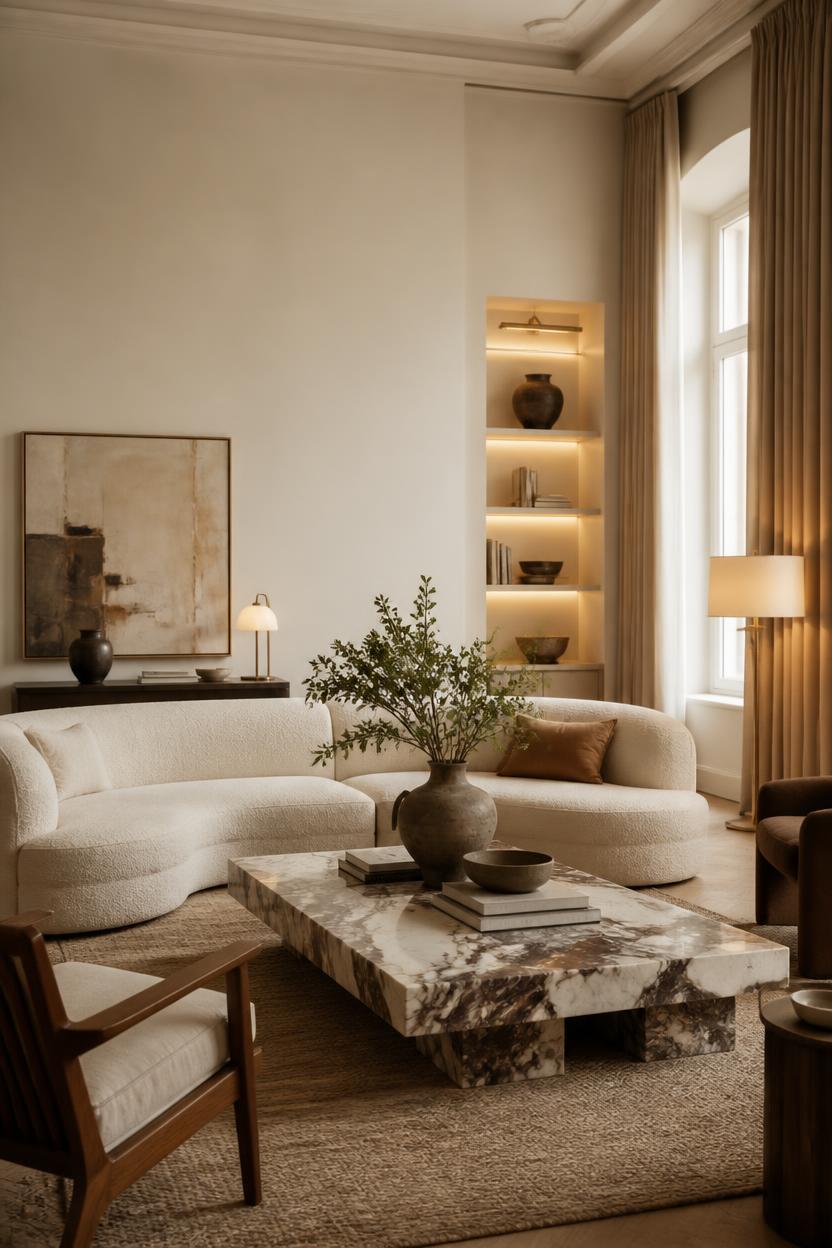
You don’t need an enormous house or an unlimited decorating budget to make your home look expensive.
In fact, some homes with very expensive furniture still don’t feel luxurious. The problem is often not how much you spent, but how the different elements of the room work together.
A few small decorating choices can make a space feel cluttered, unfinished, or inexpensive—even when the individual pieces look beautiful on their own.
The good news? Most of these mistakes are easy to fix.
Here are 7 decor mistakes that may be making your home look cheap, along with simple ways to create a more polished and luxurious-looking space.
One of the quickest ways to make a room feel chaotic is to introduce too many unrelated colors.
You might have a beige sofa, blue curtains, a red rug, gold accessories, green cushions, and several colorful pieces of artwork. Each item may look great individually, but together they can compete for attention.
Luxury interiors usually feel more intentional because they have a controlled color palette.
Start with two or three main colors and build the room around them.
For example:
You don’t have to make everything the same color. The goal is simply to make the colors feel connected.
A neutral base also gives you more freedom to introduce texture through curtains, rugs, cushions, wood, stone, and decorative objects.
Designer trick: If you’re unsure about your color palette, choose one dominant neutral, one secondary color, and one accent color.
That simple formula can make a room feel much more cohesive.
This is one of the most overlooked decorating mistakes.
A large room filled with tiny furniture can actually look less luxurious than a smaller room with a few well-proportioned pieces.
For example, a tiny coffee table floating in front of a large sofa can make the entire seating area feel disconnected. Similarly, a small rug that only sits underneath the coffee table can make a living room appear smaller.
Pay attention to scale and proportion.
Your furniture should relate to the size of the room and to the other pieces around it.
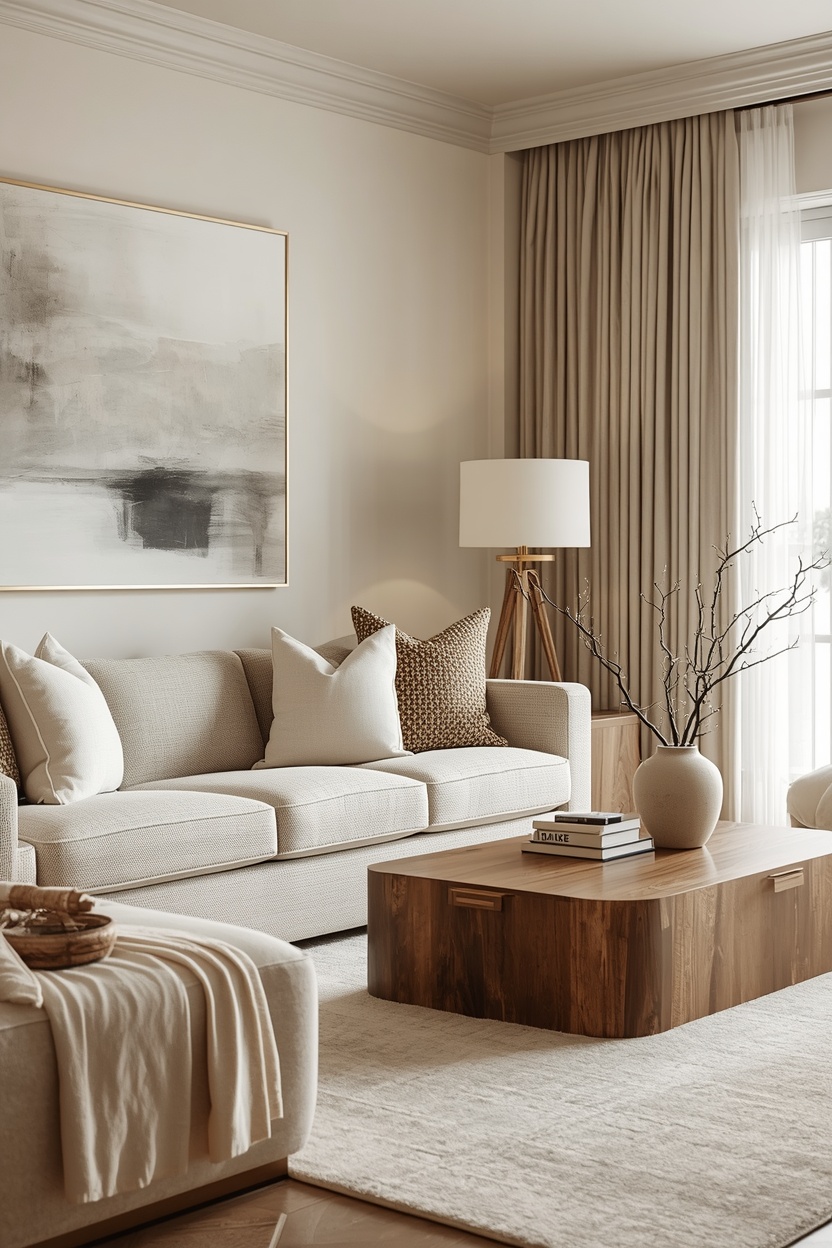
For a living room, a properly sized rug that visually connects the seating area can immediately make the space feel more finished.
Instead of filling the room with lots of small pieces, consider using fewer, larger pieces that have more visual presence.
The goal isn’t to buy the biggest furniture you can find. It’s to choose furniture that looks like it actually belongs in the room.
This sounds like a tiny detail, but it can completely change the appearance of a room.
Curtain rods installed directly above the window frame can visually cut down the height of the walls. Even beautiful curtains can look less elegant when they’re hung too low or are too short.
Whenever possible, mount the curtain rod higher and wider than the window.
This draws the eye upward and can make the windows—and often the entire room—feel larger.
Choose curtains that reach close to the floor rather than stopping several inches above it.
For a more sophisticated look, look for fabrics with a good weight and a simple, understated design.
You don’t necessarily need expensive curtains. Proper length, placement, and fullness can make a surprisingly big difference.
A luxurious room isn’t necessarily a room filled with expensive accessories.
If every shelf, table, console, and countertop is covered with decorative objects, the eye doesn’t know where to look.
Candles, vases, picture frames, figurines, books, plants, trays, and other accessories can quickly turn into visual clutter.
Give your favorite pieces some breathing room.
Instead of displaying ten decorative objects on a console, try grouping three or four pieces with different heights and textures.
For example:
A large vase + a stack of books + one sculptural object
Simple combinations often look more intentional than large collections of unrelated items.
And don’t be afraid of empty space.
Negative space is not wasted space—it helps the things you choose to display stand out.
Buying an entire furniture set can seem like the easiest way to create a coordinated room.
But when the sofa, loveseat, coffee table, side tables, TV unit, and accessories all look like they came from the exact same collection, the room can lose personality.
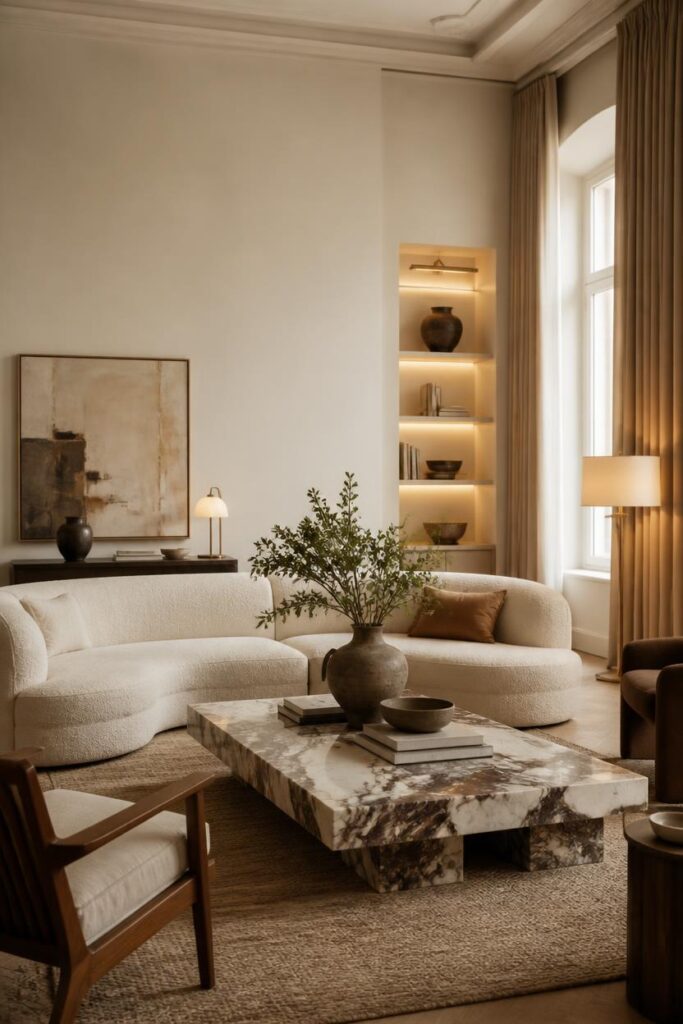
High-end interiors often feel collected rather than purchased all at once.
Mix complementary materials, shapes, and finishes.
For example, you could combine:
The pieces don’t need to match perfectly.
They simply need to work together.
A little contrast creates depth and makes the room feel more thoughtfully designed.
You can have beautiful furniture, a gorgeous rug, and carefully selected accessories—but poor lighting can ruin the entire atmosphere.
A single bright ceiling light often creates harsh shadows and makes a room feel flat.
Luxury interiors tend to use multiple layers of lighting rather than relying on one fixture.
Think in three layers:
Ambient lighting:
The overall illumination of the room.
Task lighting:
Lighting for specific activities, such as reading or working.
Accent lighting:
Lighting used to highlight artwork, architectural details, shelves, or decorative objects.
Table lamps, floor lamps, wall sconces, pendant lights, and concealed lighting can all add warmth and depth.
And don’t underestimate warm-toned bulbs.
A warmer light can make wood, fabrics, and neutral colors feel much richer and more inviting.
Trends can be fun, but decorating your entire home around whatever is popular right now can make the space look dated surprisingly quickly.
That ultra-trendy chair or dramatic accessory might look incredible on social media, but you may feel differently about it a year later.
Build your home around timeless foundations and use trends as accents.
Invest more thought into pieces that are expensive or difficult to replace, such as:
Then bring trends into smaller, easier-to-change elements such as cushions, artwork, vases, throws, or decorative accessories.
This approach gives you the freedom to refresh your home without completely redesigning it every time your taste changes.
You don’t need to replace everything in your home.
Start by looking at the room as a whole.
Ask yourself:
Is the color palette cohesive?
Is the furniture properly scaled?
Is there enough empty space?
Are the curtains positioned correctly?
Does the room have layered lighting?
Do the accessories feel intentional?
Are there too many competing trends?
Fixing just two or three of these problems can make a noticeable difference.
The secret to an expensive-looking home isn’t necessarily expensive stuff. It’s proportion, consistency, texture, lighting, and restraint.
Sometimes the most luxurious thing you can do is simply remove something that doesn’t belong.
Creating a sophisticated home is less about following every decorating trend and more about making intentional choices.
Choose a cohesive palette. Pay attention to scale. Give your furniture and accessories room to breathe. Layer your lighting. Mix materials instead of matching everything perfectly.
And most importantly, don’t feel like you need to spend a fortune.
A thoughtfully decorated room with affordable pieces can feel far more luxurious than a room filled with expensive items that don’t work together.
Which of these decor mistakes do you think is the most common? Comment Below